Introduction
Previously, Crash reconstruction used to rely on measurements, physical inspections, and manual documentation. But as automotive systems become more complex, precision matters more than ever. Modern 3D scanning technology now provides fast, high-accuracy digital data as CAD Models that support forensic analysis, insurance investigations, manufacturing quality checks, and legal processes.
Whether the objective is determining crash causation, verifying part replacements, or analyzing failure points, 3D scanning delivers measurable clarity that photographs alone cannot provide.
What 3D Scanning Captures in Crash Reconstruction
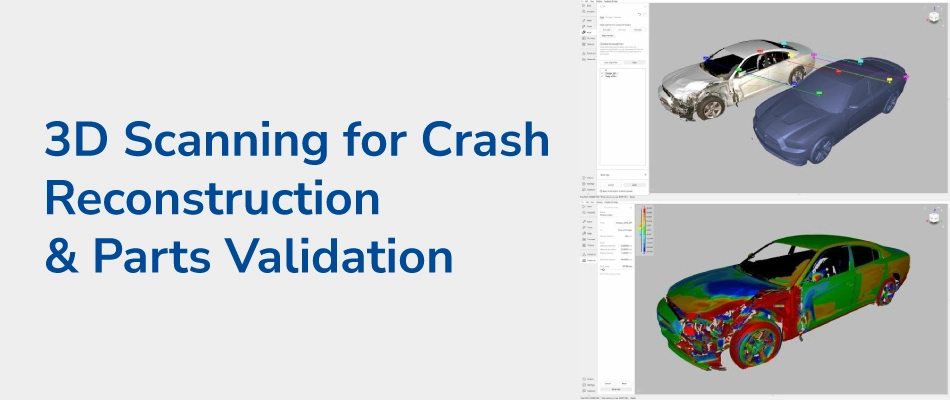
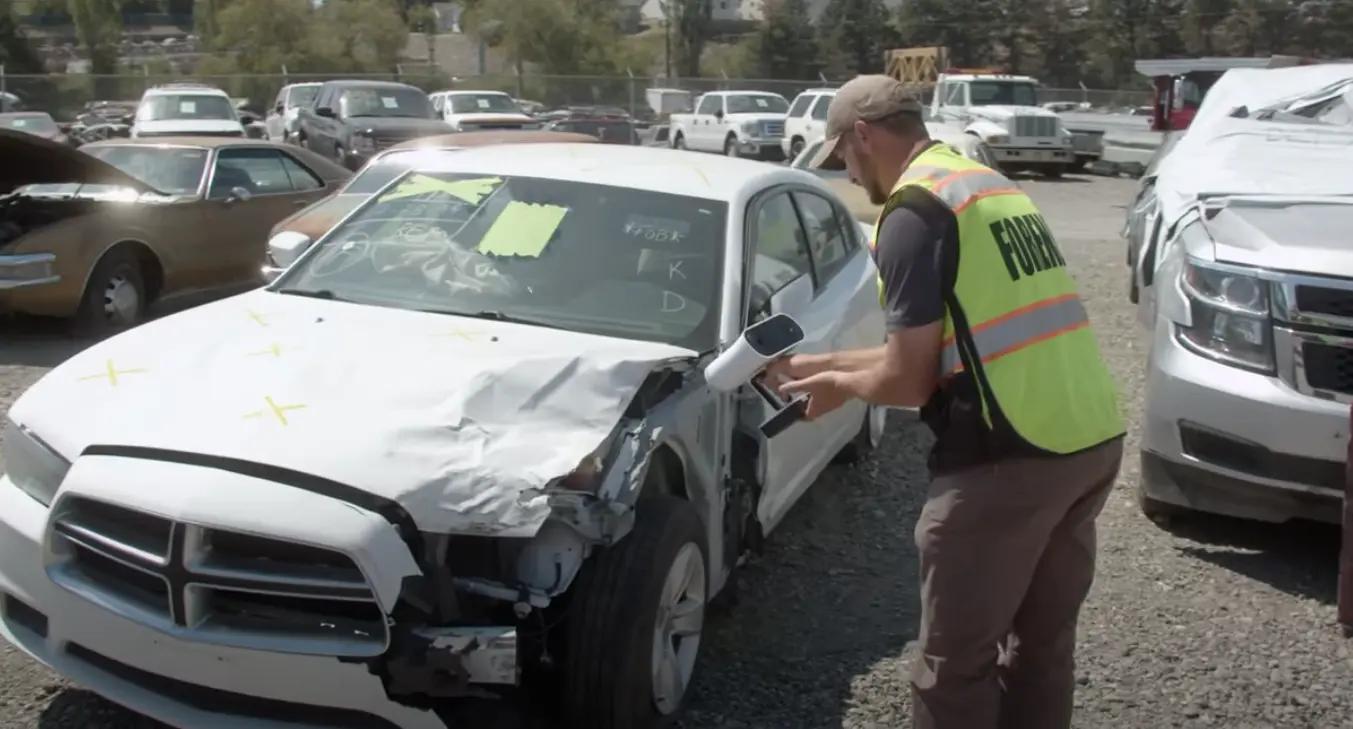
3D scanners capture millions of data points in seconds, producing full digital models of:
- Impact deformation
- Vehicle geometry
- Component displacement
- Surface damage patterns
- Spatial relationships between components
- Ground and environmental features
This data becomes critical when reconstructing impact dynamics or comparing post-crash geometry to OEM specifications.
Accuracy Matters for Legal & Insurance Applications
Crash cases often involve multiple parties — insurers, attorneys, OEMs, repair shops, and investigators — all requiring objective measurements. 3D scanning provides:
- Traceable digital evidence
- Time-stamped measurements
- Repeatable and verifiable analysis
- Reduced subjective interpretation
- Preservation of evidence long after physical vehicles are scrapped
These benefits make scanning particularly valuable when litigation or subrogation is involved.
Parts Validation & Failure Analysis
Beyond scene reconstruction, scanning supports forensic failure analysis and parts validation, such as:
- Comparing damaged parts to OEM CAD models
- Measuring deformation or stress points
- Verifying after-market component fitment
- Identifying dimensional tolerances out of spec
- Reverse engineering components for analysis
Scanning often reveals micro-level dimensional deviations that cannot be detected visually.
Scan-to-CAD for Reverse Engineering & Rebuild Workflows
In cases involving Luxury, Limited Edition, Antique, or discontinued vehicles or custom modifications, scan-to-CAD helps in:
& Parts Validation
- Reconstruction of damaged components
- Fitment checks for replacement parts
- Digital re-creation of legacy items
- Preparation for prototype or 3D printed replacements
This is especially useful in motorsport, restoration, and aftermarket modification sectors.
Time & Cost Advantages
Compared to traditional documentation:
| Process | Traditional | 3D Scanning |
|---|---|---|
| Measurement time | Hours to days | Minutes |
| Repeatability | Low | High |
| Accuracy | Manual tolerance | Micron-level |
| Documentation | Static photos | Full 3D digital twins |
By reducing manual labor and increasing accuracy, investigators and insurers can resolve claims more quickly, leading to shorter overall claim cycles and faster, more reliable reporting.
When to Deploy 3D Scanning in Crash Scenarios
Common triggers include:
- Severe deformation events
- Disputed fault cases
- Complex mechanical failures
- Rapid evidence preservation needs
- Product liability concerns
- After-market modifications under review
Industries Using 3D Crash Reconstruction
3D scanning is now standard in:
- Automotive forensic labs
- Insurance claim departments
- Legal litigation firms
- OEM R&D departments
- Collision repair & body shops
- Aftermarket engineering companies
- Motorsports safety organizations
Future Trends: AI, Automation & Digital Twins
As AI processing and scan-based metrology advance, expect:
- Automated defect recognition
- Faster scene reconstruction
- Digital twin integration in accident analysis
- More insurers are requiring digital documentation.
This shift mirrors changes already seen in aerospace and heavy manufacturing QA.
Conclusion
3D scanning bridges the gap between physical crash evidence and digital forensic analysis. Its precision, speed, and reliability make it invaluable for crash reconstruction, parts validation, and failure analysis — especially as vehicles and legal cases grow more complex. Digital Scan 3D helps organizations turn physical evidence into accurate digital data, enabling better decisions, faster reporting, and more reliable forensic outcomes.